(Persistence of vision)-it is hard to say when this technique actually
started as it is believed the romans had used this on their shields and
pottery. The Egyptians also did this to tablets. Even cavemen drew on walls
using this technique. That making it one of the earliest technuiqes of animation.
A man called Roget
wrote an essay about this in 1824 and because of this, researchers from the 19
century began to work and evolve his theory of the persistence of vision.
The way this works,
there are a multiple amount of images, each drawn slightly different than the
other. The pictures are then spun around and you start seeing the pictures
moving to make the animation.
For example…. The
image below shows a bird and a cage on each side of the card, as the person
spins the card around it creates an image of the bird inside the cage.
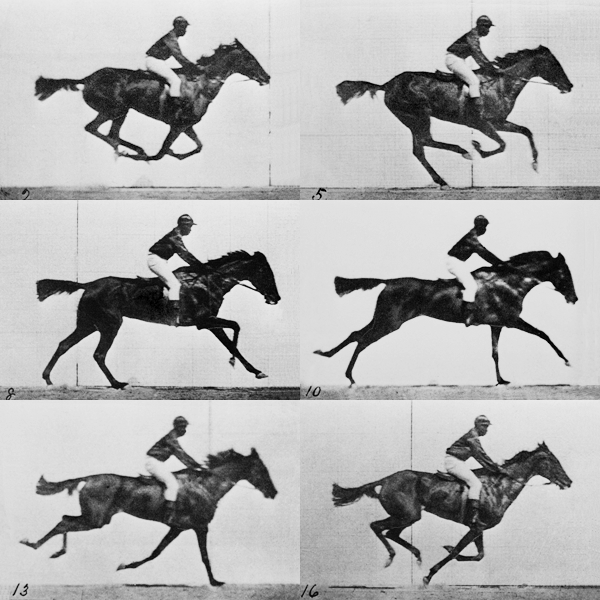
This is the type of technique Eadweard Muybridge used when he made the horse in motion animation shown below.
Eadweard was a photographer and was hired to prove a bet that horses lifted all four legs when they gallop. He then lined up some cameras to take simultaneous pictures of the horse galloping and then put the pictures one after another to make the animation.
At the same point as proving that horses lifted all legs while galloping he also made one of the first motion pictures making him regarded as one of the fathers of motion picture.
Persistance of vision is pretty much an illusion of what our eyes see and make up in between the pictures.
Probably the best way to show and describe it is within text, in the image below there is allot of spelling mistakes but you can still read it. this is because our eyes don't read all the letters but the word altogether and automatically fill in whats wrong.
(Cel Animation)-Theres a few areas in the history of the cel animation technique to look at like Gertie the Dinosaur in 1914 just before the cel technique started.
It was done in a similar way of drawing the image and taking the picture but it was done on one sheet of paper and rubbing out making it very jittery appearance.
The technique was improved later on by the slash and tear system, but then in 1915 the cel animation progress was invented byEarl Hurd and John Bray. The first cel animation to actually make a big name was made by Windsor Mcray called The Sinking of the Luisitania in 1918
In 1928 Micky Mouse Steamboat Willie was made and it was one of the first animations to have a sycronized sounds with the animation.
1937 was also a big part of cel animation when "Snow White" was made with the rotoscoping technique in colour for the first time.
The rotoscoping technique is used for the character movement. They do this by getting an actor to do the movement the character is making and film them doing it, they then use each frame to draw the animated character and when they play it the character moves.
(Claymation)-The way this was made is with lots of different clay made people and they are put on a small set and a picture would be taken then the figure would be moved just a tiny bit and then another picture. After hundreds of them have been taken and u play them all after one another they will make a few seconds of movement.
Claymation appeared in in 1921 in Out Of Inkwells "Modelling".
It was only used for a short time but the technique soon becomes big in the world of animation.
In 1986 Aardmans Stephen Johnson and the brothers quay made a music video sledgehammer for peter Gabriel winning many rewards.
Another Aardman animation and probably the most famous produced characters made in clay is Nick Parks Wallice and Gromit.
He has made a few short films and a full length feature with these two iconic characters and has also made another film chicken run.
Nick Park also made a TV show called Creature Comforts.
Yallery Brown storyboard
My 2D flash walk cycle
Evaluation
i feel like i have made a good walk cycle animation and i have had some positive feedback by the viewers who have watched it.
Positive
- It looks smooth
- Layout is good
- Sound is synced
- People have noticed and like the hidden easter egg i have added into the animation
Negative
- The sound does not go with the surrounding, its more like walking in a corridor and not the woods. (i did get the sound from the corridor)
I myself think it went well, i didn't have any problem other than converting the sound and getting animation on youtube without skipping. these problems where easily fixed with just going to the right place to change the format and by changing the frames by second from 24 to 25.
I would want to change some stuff like the sound of the walking and hopefully get the animation in better quality for youtube once its fully complete.
I have started on making the whole animation and have already completed a title sequence which a few people have seen and given me positive feedback on, It has even made one person say he's going do the same type of thing in his.